
Learning how to pray for child sponsorship ministries is not a sentimental add-on to giving. It is part of Christian stewardship: asking God to protect children, correct adult motives, and produce fruit that can be measured in faithfulness, not merely in sentiment. For many donors, the most difficult tension is that the biblical call to care for vulnerable children is clear, and the modern systems built around that call can drift into practices that require serious discernment.
Scripture refuses to separate mercy from truth. James calls care for orphans and widows “pure and undefiled religion” (James 1:27). The prophets condemn those who “trample the head of the poor” while maintaining religious appearances (Amos 2:7). Prayer for sponsorship ministries therefore asks for both compassion and integrity: for children to be protected and strengthened, and for ministries to resist the distortions that money, marketing, and power can introduce.
Pray for theological clarity about what sponsorship is and is not
Ask God to keep child-centered ministry from becoming donor-centered storytelling
Child sponsorship is often described in relational terms—letters, photos, school progress, family updates. Those elements can be a genuine means of encouragement and accountability. They can also slide into a narrative economy where the child becomes a fundraising instrument and the donor becomes a consumer of inspiring outcomes.
Pray that sponsorship ministries will hold fast to a Christian view of the child: not an object lesson, not a brand asset, but an image-bearer entrusted by God. Jesus’ warnings about causing “one of these little ones” to stumble (Matthew 18:6) are not rhetorical flourishes. They are moral guardrails for adult systems built around children.
Pray for a doctrine of stewardship that includes verification and accountability
Christian donors sometimes feel a false choice: either trust a ministry’s claims without questions, or become cynical and disengaged. Scripture presents a third way—faith expressed through wise stewardship. “It is required of stewards that they be found faithful” (1 Corinthians 4:2). Faithfulness includes financial honesty, responsible governance, and truthful reporting.
Across our verification work at Most Trusted, we see that the healthiest sponsorship ministries treat scrutiny as a form of neighbor-love. They welcome clear questions about child protection, program outcomes, and the use of restricted gifts. We recommend praying that leaders will have the humility to invite accountability, not resist it.
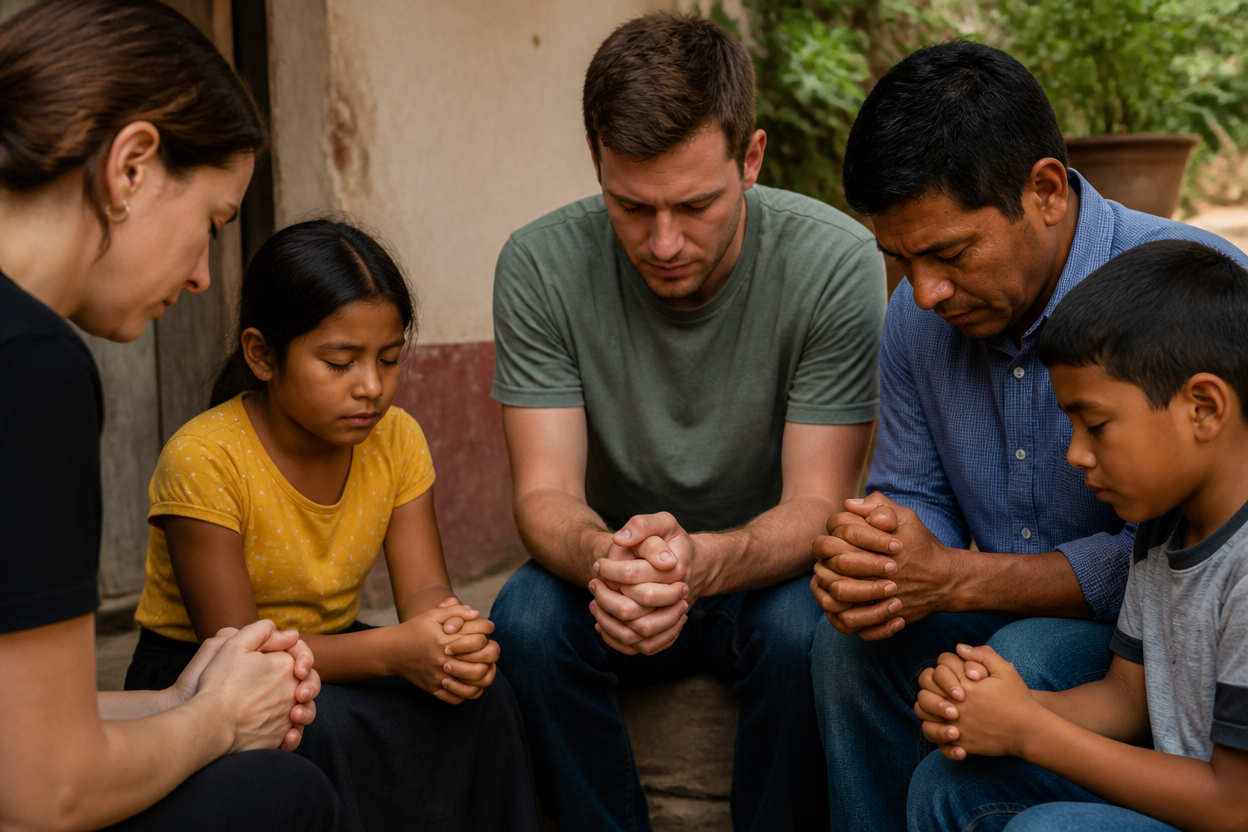
Pray for child protection and family strengthening as first priorities
Ask God to prevent avoidable harm and strengthen safeguarding systems
The modern child sponsorship movement has matured in part because the broader child welfare field has named real harms. The evidence that institutionalization can damage children is strong, and it has compelled many Christian ministries to pivot toward family-based care and community strengthening. A widely cited meta-analysis in The Lancet found that children raised in institutions have markedly higher risks of developmental and mental health difficulties compared with children in family settings; it concluded that institutional care should be replaced with family-based alternatives where possible (The Lancet).
Even when sponsorship is community-based rather than institutional, children can be exposed through data handling, photography, staff misconduct, or poorly supervised contact with visitors. Pray for ministries to implement and enforce rigorous safeguarding: background checks, training, incident reporting, clear boundaries, and a posture that prioritizes the child’s safety over reputational protection.
Pray that sponsorship strengthens households rather than substituting for them
Christians genuinely disagree about the best design for sponsorship: whether funds should be directed to a named child, to a community program, or to a blend that combines personal connection with local discretion. What is less disputed is the long-term importance of stable, loving family systems. Where sponsorship unintentionally weakens parental authority, creates resentment among siblings, or produces dependency, it can undercut the very resilience it intends to build.
Pray that ministries will serve parents and caregivers as partners rather than as obstacles. Pray for honest assessment of local power dynamics, and for culturally wise approaches that avoid importing Western assumptions about childhood, education, and success.
Pray for integrity in communications, finances, and reporting
Ask God to protect truthfulness in fundraising and donor communications
Child sponsorship ministries often operate at the intersection of pastoral concern and modern marketing. That combination can tempt leaders to overstate outcomes, blur the use of restricted funds, or imply a level of direct causality that is not actually true. Mature donors usually do not require perfect precision in every story, but they do require the ministry’s public claims to be consistent with its internal records and its actual program design.

Pray that communications teams will choose accuracy over emotional force. Pray for leaders to resist the temptation to treat a child’s photo, testimony, or letter as a tool for donor retention. The command against bearing false witness applies to institutions as well as individuals (Exodus 20:16).
Pray for financial controls that honor the vulnerability of restricted gifts
Sponsorship giving is frequently understood by donors as restricted—designated for a child or a defined program. This is not only a legal and accounting question; it is a spiritual question about keeping faith with the giver and protecting the child from becoming a revenue stream. Ministries need clear internal controls, competent financial oversight, and transparent reporting that explains how sponsorship funds are handled in practice.
When donors evaluate ministries, many still overemphasize overhead ratios. The leaders of Charity Navigator, Candid (formerly GuideStar), and the Better Business Bureau have publicly warned that overhead alone is a poor measure of nonprofit performance and can pressure organizations into unhealthy underinvestment in staff and systems (Charity Navigator). Pray that sponsorship ministries will invest appropriately in safeguarding, financial management, and monitoring, even when those costs are not glamorous.
Pray for governance and leadership that can withstand complexity
Ask God to form leaders who can hold compassion and candor together
Sponsorship ministries face real operational tensions: local churches and partners differ in capacity; corruption is a live risk in many contexts; and donor expectations can be unrealistic. Leaders need more than good intentions. They need moral courage, disciplined systems, and the ability to communicate hard truths without losing the heart for children that drew them to the work.
Pray for boards that function as true fiduciaries rather than ceremonial supporters. Pray for leadership teams that invite independent review. This is one reason many donors turn to verification work: it is difficult to assess governance and internal controls from a brochure or a compelling story.
Pray that ministries resist perverse incentives in the sponsorship model
Some sponsorship programs can create incentives that are difficult to see from a donor’s vantage point: pressure to grow the number of sponsored children regardless of local capacity, reliance on emotionally intense content to keep donors engaged, or prioritizing sponsor-facing deliverables over locally meaningful outcomes. The field has had to reckon with these dynamics without abandoning the legitimate good that sponsorship can accomplish.
Pray that ministries will design programs that reward long-term faithfulness—children protected, families strengthened, churches equipped—rather than short-term metrics that are easy to market.
Pray as donors who take responsibility for discernment
Pray for your own formation as a giver
Prayer for child sponsorship ministries should include prayer for the donor’s own heart. Sponsorship creates a real sense of personal connection, and that can be spiritually fruitful. It can also tempt donors toward saviorism, impatience with slow outcomes, or a preference for emotionally satisfying updates over less visible system-building.
The When Helping Hurts framework, articulated by Steve Corbett and Brian Fikkert, has shaped much of the modern Christian conversation by naming how poverty alleviation can harm when it undermines local agency and dignity (When Helping Hurts). Pray that God will purify motives: generosity shaped by humility, not by control.
Pray with specific, verifiable requests tied to faithful practice
Many donors ask how to pray “effectively” for sponsorship. One helpful discipline is to pray for things that can be meaningfully pursued, assessed, and reported—without reducing ministry to metrics. As donors, we can ask for fruit that aligns with Scripture and with sound nonprofit practice.
- Pray for robust child safeguarding policies, training, and incident response that protects children and honors the truth.
- Pray for honest communications that explain how sponsorship funds are used and what outcomes are realistically expected.
- Pray for local partners and churches to have wisdom, capacity, and authority, rather than being treated as subcontractors.
- Pray for financial integrity: clean audits where appropriate, strong internal controls, and faithful handling of restricted gifts.
- Pray for governance that can confront failure, correct course, and maintain accountability under pressure.
For donors who want to situate these prayers within a broader understanding of program design and ministry accountability, Child Sponsorship Ministries provides a fuller view of the opportunities and the risks donors should take seriously.
For donors who want to anchor sponsorship discernment more explicitly in Scripture’s moral logic—justice, mercy, truthfulness, stewardship—Biblical Foundations for Child Sponsorship offers additional theological grounding for prayer and evaluation.
Most Trusted’s role is not to replace prayer with process. It is to help donors give with confidence by evaluating ministries against The Most Trusted Standard, a 15-criteria framework spanning faith foundation, financial integrity, governance and leadership, and transparency and effectiveness. Pray that ministries will welcome this kind of scrutiny, not because they fear donors, but because they fear God and love the children entrusted to their care.
FAQs for How to pray for child sponsorship ministries
Should we pray differently for child sponsorship than for other Christian ministries?
Yes, because sponsorship places a real child at the center of an adult funding and communications system. We should pray for everything we would pray for any ministry—faithfulness to Christ, integrity, wise leadership—while adding specific prayers for child protection, truthful storytelling, responsible handling of images and data, and program designs that strengthen families rather than displacing them.
How can we pray when we are unsure whether a sponsorship model is healthy?
Pray for light and correction rather than for confirmation. Ask God to reveal hidden harms, conflicts of interest, and misleading claims, and to give the ministry humility to change course. In parallel, take responsibility for discernment: request clear explanations of how funds flow, what safeguarding looks like, how local partners are governed, and what outcomes are tracked. Prayer and due diligence are not competing commitments for Christian donors; they are complementary forms of stewardship.
A faithful prayer is both compassion and truth
Prayer for child sponsorship ministries is not a substitute for careful giving, and careful giving is not a substitute for prayer. Scripture binds mercy to truthfulness, and generosity to stewardship. As we pray, we ask God to protect children, strengthen families, purify motives, and give ministries the courage to operate in the light—so that the good we intend through sponsorship becomes good that can endure.



